
Cough in autumn does not always mean the same disease. It may accompany a cold, persist after an infection or appear when the air is irritating. It’s worth first assessing how long it lasts and whether there are any other symptoms. This makes it easier to choose reasonable steps at home and when to contact a doctor. Below you will find a simple observation plan, ways to comfort your throat and the limits of home methods. You will also learn what is actually known about the honey drink and what cannot be inferred from the description of the bee product. We do not promise that the spray or supplement will cure the cause of your cough. First, pay attention to your breathing. Second, record your temperature, duration of symptoms, and medications you are taking. For example: a few days of a mild cough with a runny nose is a different situation than a cough with blood. This division helps you act quickly when alarm signals appear. Also notice if your cough changes after exercise or at night. This is valuable information during consultations and helps avoid accidental selection of funds.
Cough is a symptom, not a diagnosis. The cause may be a respiratory infection, postnasal discharge, asthma, smoke, or other factors. The NHS cough guide describes common causes and signs that require advice. Don’t try to make a diagnosis based on the sound of the cough. Pay attention to fever, shortness of breath, chest pain, and the rate of change.
Therefore, cough in autumn requires looking at your entire well-being. If the problem worsens, seek a medical evaluation. Postponing consultations due to the season may delay help.
If the cough only occurs in a specific area, note whether there is smoke, dust, or a strong odor. This tip does not replace examination, but helps describe the situation. Cough in autumn can change from day to day. So don’t just focus on the question of whether it’s “dry” or “wet”. Duration, breathing, fever and general well-being, as well as pre-existing lung disease, are important.
After a cold, the cough may persist for some time. The NHS reports that many episodes resolve on their own within three to four weeks. This is general information, not a date to which you have to wait despite the deterioration. If the symptom bothers you when you breathe or comes back regularly, contact us first. In turn, in the case of chronic diseases, individual recommendations may be different.
Moreover, cough in autumn after illness may become more severe due to irritating air. If you don’t see any improvement, ask for advice instead of testing new products aimlessly.
Seek urgent help for shortness of breath, chest pain or coughing up blood. You should also consult if the cough lasts for more than three weeks, gets worse quickly or is accompanied by significant weakness. The NHS Cough Guide lists these situations among the indications for assessment. In people with lung or heart diseases or weakened immunity, it is worth reacting earlier. Do not wait for the end of home treatment if you have alarm symptoms.
However, autumn coughwithout red flags also deserves attention if it persists.Check for alarm signals now so you know when to stop self-care.
When a symptom persists after a cold, it is easy to get used to it and stop noticing the changes. Set a reminder to check back after a few days to see if your seizures are less frequent. A dry cough following an infection may gradually subside, but new breathing difficulties require evaluation sooner. A cough in autumn with weakness should not be explained by the weather alone. If in doubt, prepare a short chronology of symptoms for consultation.
A warm drink with honey can soothe the feeling of irritation. However, the NHS on cough notes that the evidence on the effectiveness of such home remedies is limited. Honey does not replace the treatment of the disease that causes cough. Do not give honey to children under one year of age. People with allergies to bee products should avoid the ingredient that causes reactions. When you control your sugar intake, include it in your diet.
Therefore, autumn cough can sometimes be alleviated with simple methods, but they must not be confused with treating the cause. Rapid deterioration always requires a different plan.
Frequent coughing may additionally irritate the throat. Drink fluids, avoid smoke and rest when your body needs it. If you have muscle pain or a fever, ask your pharmacist for appropriate symptomatic medication. Do not combine preparations without checking their composition. Multi-ingredient cold medicines may duplicate the same substance. The NHS Respiratory Infections guide describes the basics of self-care.
Additionally, autumn coughwith severe sore throat may require a separate assessment.Write down your symptoms and medications so you don’t lose important information during your consultation.
Pay attention to how you understand the word “helps.” If the drink temporarily reduces the scratching, it is a noticeable relief. However, this does not eliminate the virus or cure asthma. Cough honey for adults can be a pleasant part of self-care when there are no contraindications. Cough in autumn associated with another disease requires treatment tailored to the cause. Do not translate the results of testing one form of honey into any finished product.
The air in a heated room may increase the feeling of dry throat. However, it does not automatically explain every cough. Ventilate the room, avoid smoke and keep humidification devices clean. Don’t try to “cure” a persistent cough just by changing the humidity. Pay attention to whether the ailment appears after exercise, at night or after contact with a specific agent.
Therefore, cough in autumn is worth observing in the context of the surroundings, but medical assessment remains important in case of disturbing signals. CDC air quality discusses the importance of ventilation for respiratory illnesses.
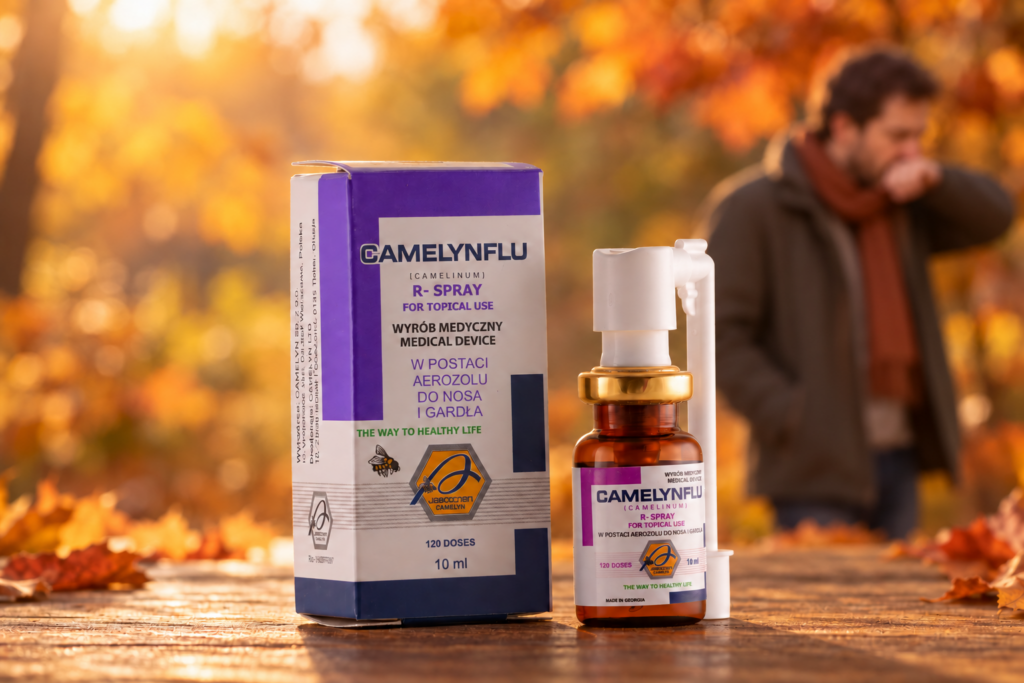
The manufacturer describes Camelyn Flu Spray primarily in the context of the throat, nose and mouth. You can consider it as a topical product according to the instructions if throat discomfort is a problem. This is not evidence of treating the cause of cough or preventing infection. Before use, check the current composition, target group and warning about hypersensitivity to honey. If symptoms are severe, consultation takes priority.
Moreover, cough in autumnmay require completely different treatment than throat care.Check the spray chart and talk to your pharmacist about their role. Other product forms are described in the Camelyn catalogue.
When choosing a topical remedy, pay attention to what symptoms the instructions actually mention. If the goal is to soothe the throat, evaluate comfort after use, do not use it to measure how quickly the condition goes away. Throat irritation when coughing can have several causes. A cough in autumn that wakes you up every night or gets worse quickly requires a conversation with your doctor. The throat product does not replace an inhaler or other previously prescribed treatment.
On the website Camelyn M2 there are capsules with a lyophilized product derived from honey. The dietary supplement is not a cough therapy. EFSA explains the difference between a supplement and a medicine: a supplement can supplement your diet but is not intended to treat disease. If you are considering purchasing it, check the warnings and discuss your concerns with your pharmacist. Do not discontinue prescribed medications in favor of a product from the store’s offer.
In turn, autumn coughshould be assessed according to the cause and symptoms.Compare products according to their actual purpose before you decide to purchase.
If you have been previously diagnosed with asthma or another lung disease, follow your treatment plan. Additionally, keep a record of your measurements if your doctor recommends them. It is worth discussing a new or severe cough in autumn with your doctor. Therefore, prepare a list of symptoms before the interview. Do not change the dosage of your inhalers yourself just because the heating has started or you have a cold in the house.
Write down the onset of the cough and the three most important symptoms. Then take care of rest, fluids and hygiene. If you suspect an infection, limit close contact with people who are at higher risk of severe disease. CDC Respiratory Infection Management provides rules of thumb. After improvement, return to your usual rhythm gradually. If you have questions about how to use the product, please use FAQ or Camelyn contact.
Also remember that in children the course of the disease and the rules for using products differ from the recommendations for adults. If your child has a cough, contact your pediatrician if you are unsure. Do not give honey to your baby. Ultimately, autumn coughrequires patient observation and readiness for consultation.Read product information if you need throat comfort support, but do not delay medical attention.