
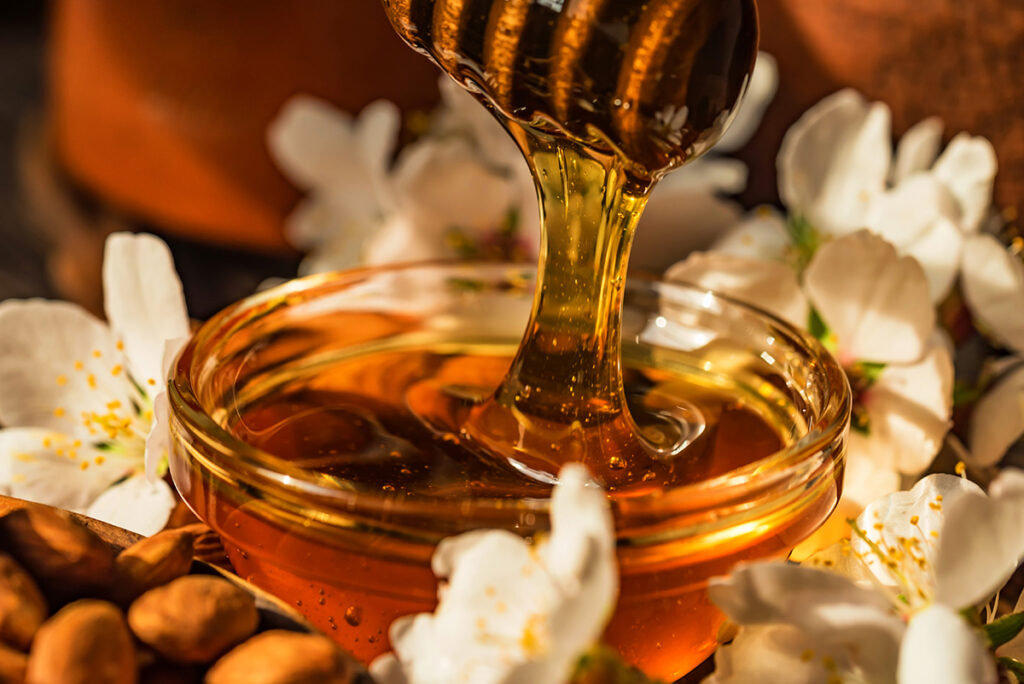
Did you know that honey has been used for centuries to help protect the body naturally? Honey against bacteria is a fascinating story in which bee products, such as those found in Camelyn preparations, play an important role.
In particular, Camelyn M3 ointment supports the care of wounds, skin irritation and minor skin problems. It combines traditional beekeeping knowledge with scientific interest in natural ingredients. The Camelyn.pl website provides information about these products, which are based on a Georgian formula.
In this article, written in a popular science style, we explain how honey against bacteria works. We also present user experiences and scientific facts. Get ready for an inspiring journey into the world of natural skin support.
Honey has unique properties that help limit the growth of bacteria. It contains hydrogen peroxide, which is naturally formed during honey production by bees and works as a mild antiseptic.
In addition, honey has a low pH and a high sugar content. This creates an environment that is unfriendly to many microorganisms. Scientific studies show that honey may inhibit the growth of bacteria such as Staphylococcus aureus and Escherichia coli.
Honey against bacteria is effective because it supports the body in protecting the skin and helps tissue regeneration.
In Camelyn preparations, such as Camelyn M3 ointment, honey is combined with propolis. This strengthens its natural effect. Propolis, also known as “bee glue”, contains flavonoids and polyphenols. These compounds have antibacterial and anti-inflammatory properties.
Thanks to this, Camelyn M3 may support the care of wounds, burns and dermatological problems.
Propolis is another key ingredient in the story of honey against bacteria. Bees produce it from tree resins to protect the hive from microorganisms.
It contains more than 300 active compounds, including quercetin. This compound helps neutralize free radicals and reduce inflammatory processes.
In Camelyn M3 ointment, propolis supports skin regeneration and acts as a natural protective ingredient. Its antiviral and antibacterial properties make it a valuable addition to honey.
Camelyn M3 may support the regeneration of minor wounds and skin damage. Honey and propolis help create a protective layer on the skin.
The ointment may help soothe irritated, dry and sensitive skin. It can be useful as part of daily care for skin prone to inflammation.
Camelyn M3 may also be used in gynecology and proctology, according to specialist recommendations. It can support tissue regeneration and help reduce discomfort.
Camelyn M3 ointment supports the care of skin problems such as eczema, burns and minor wounds. Its ingredients, including honey and propolis, create a protective barrier that helps reduce the risk of skin infection.
What is more, the ointment supports skin regeneration. This makes it suitable for people with sensitive skin. Camelyn.pl emphasizes that the product is based on natural ingredients, which may reduce the risk of irritation.
Camelyn M3 may also be used in gynecology and proctology. It can help soothe inflammation and support tissue repair.
For example, in the care of hemorrhoids, the ointment may reduce discomfort and support healing. Thanks to this, the product is versatile and can be used in different situations.
Honey against bacteria is not only about care after irritation appears. It is also about prevention.
Regular use of Camelyn M3 on minor cuts may help protect the skin from bacterial contamination. Its soothing and anti-inflammatory properties support healthy skin.
Camelyn.pl states that scientific publications describe the properties of Camelyn products, which strengthens interest in their use.
For wounds and irritation:
Apply a thin layer of Camelyn M3 ointment to clean skin. Use 1–2 times daily.
In autumn and winter:
Use the ointment on chapped hands or lips to protect the skin from irritation.
In gynecology or proctology:
Use according to your doctor’s or specialist’s recommendations.
Honey against bacteria is a story of natural support. Ingredients such as honey and propolis may help protect the skin, support regeneration and soothe inflammation.
Camelyn M3 ointment combines the power of bee products with practical skin care. It can support the care of wounds, irritation and sensitive skin.
Visit Camelyn.pl to learn more and discover how bee products may change your approach to natural skin support.