
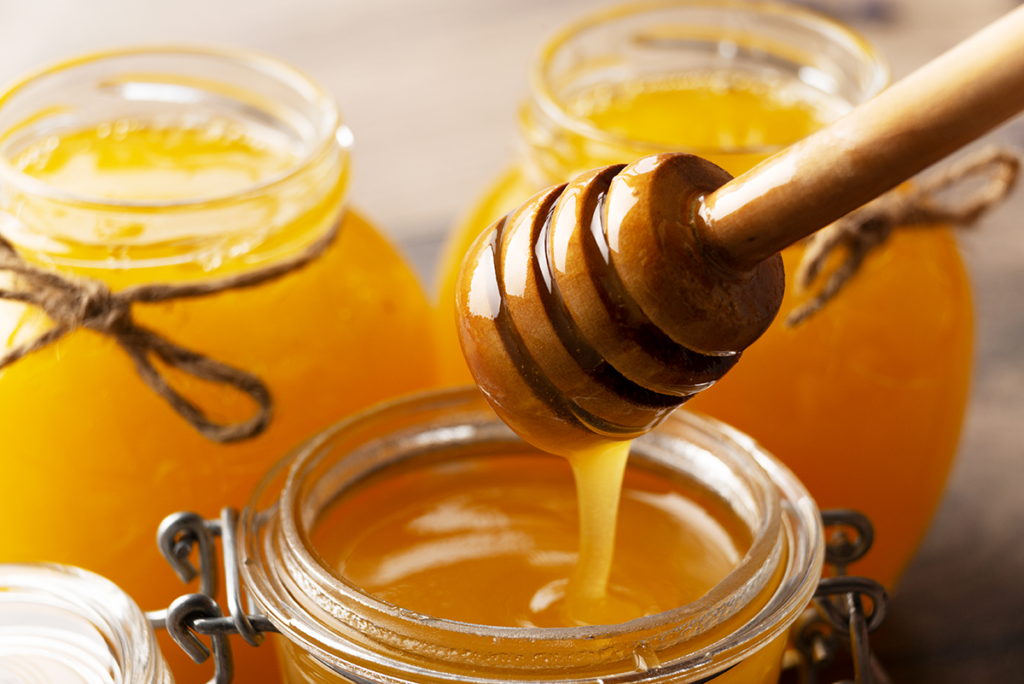
Honey for immunity as a natural antibiotic is a phrase that appears increasingly often in discussions about preventive health care. In 2026, when seasonal infections are still a challenge, many people are returning to traditional solutions that are also supported by scientific research. Honey is not just a sweetener. It contains compounds that inhibit the growth of pathogens and support the immune system.
Therefore, regular consumption of honey may reduce the risk of colds and shorten their duration. For example, studies indicate a reduction in respiratory infections by as much as 20–30% with systematic use. However, not every honey works the same way. The strongest effects are observed in varieties rich in aldehydes, phenols, and ketones — substances with antiseptic and immunomodulatory properties.
Honey inhibits bacteria thanks to its low pH, high osmolarity, and the presence of enzymes (glucose oxidase → hydrogen peroxide). However, the key role is played by bioactive compounds: aldehydes and ketones show strong antiviral activity, while phenols neutralize free radicals.
Additionally, honey stimulates cytokine production (IL-1, IL-6), which strengthens both humoral and cellular immunity. As a result, the body copes better with influenza viruses, RSV, or bacteria such as Staphylococcus.
In the mountainous regions of Georgia, bees collect nectar from plants rich in polyphenols. This produces honey with an exceptional concentration of aldehydes, phenols, and ketones. These substances give it stronger anti-inflammatory and regenerative properties than many European varieties.
For example, laboratory studies have shown that such extracts inhibit viral replication more effectively than standard linden honey. Therefore, preparations based on Georgian honey are gaining recognition as natural immune support.
Humoral immunity involves antibody production — honey supports B lymphocytes. Cellular immunity engages macrophages and T lymphocytes, where cytokines released after contact with phenols play a key role.
Additionally, antioxidants protect immune cells from oxidative stress. As a result, after 3–4 weeks of regular use many people notice fewer infections.
Simple ways to include honey:
• 1–2 teaspoons daily dissolved in warm water with lemon – morning and evening
• added to herbal tea (linden, elderberry) – supports respiratory health
• gargling with a honey-salt solution – soothes throat irritation
During periods of increased risk (e.g., working in large groups), the dose may be increased to 3–4 teaspoons.
Publications from 2024–2025 confirmed that honey extracts inhibit the growth of influenza A viruses and resistant bacteria (e.g., MRSA). Source: National Institute of Public Health data – gov.pl/zdrowie and similar studies on PubMed.
However, honey does not replace antibiotics in severe infections — it works as supportive therapy.
In addition to traditional honey jars, concentrated extracts are also available. For example, Camelyn preparations (M1 ampoules, M2 capsules) use Georgian honey rich in active compounds. Thanks to this, they deliver a higher concentration of aldehydes and phenols in a convenient form.
Learn more about Georgian honey extracts → https://camelyn.eu/
Honey is safe for most people over 1 year of age. The exception is allergy to pollen or bee products. Statistically, adverse reactions occur in less than 1% of cases.
Additionally, children under 12 months should not consume raw honey due to the risk of botulism.
Honey for immunity as a natural antibiotic is a simple and tasty solution supported by centuries of tradition and modern science. Regular use supports the body in fighting pathogens and helps it recover faster.